

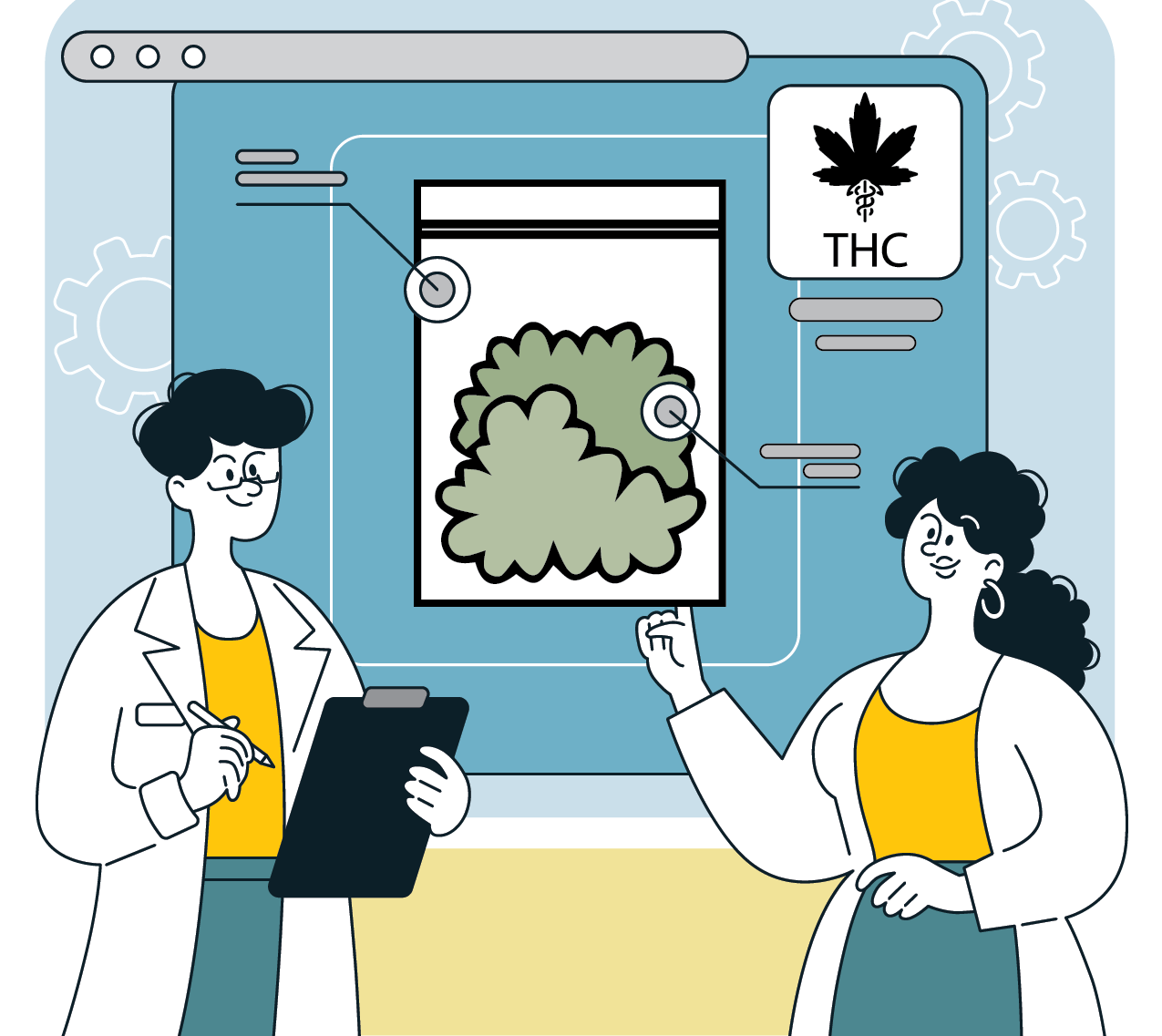
Healthcare providers will need education to certify new drug to patients if the state passes MMP.
If the state of Mississippi passes a Medical Marijuana Program (MMP), there will be an immediate need for the education of healthcare providers allowed to certify this new drug to their patients. There is a significant knowledge gap with medical marijuana among health professionals.
Physicians are not trained on cannabis’ medical applications, specifically, the endocannabinoid system—comprised of receptors that bond with the compounds THC and CBD—is not taught in medical school3. While provided the legal authority to certify medical marijuana, medical professionals may be placed in a vulnerable position due to lack of drug-related training.
Currently, there is no professional training for Mississippi medical providers that would afford them the knowledge or self-efficacy for certifying this treatment1,2. However, Mississippi’s Board of Medical Licensure rules provide an opportunity for minimum training for a physician with an active DEA certificate holder (see Figure1).
Figure 1
“Every Mississippi licensee must earn or receive not less than forty (40) hours of Category 1 continuing medical education in a two-year cycle as a condition precedent to renewing his or her license for the next fiscal year. For every Mississippi licensee with an active DEA certificate, five hours must be related to the prescribing of medications with an emphasis on controlled substances.”
Source: Mississippi State Board of Medical Licensure, Administrative Code. “Rule 2.1 | Basic Requirement”, p.18, Part 2610 Chapter 2: CME Requirements; https://www.sos.ms.gov/ACProposed/00019434b.pdf
There are nine states that have Medical Marijuana Programs that require medical marijuana continuing medical education (CME) units to be a registered provider while other states provide CME units but do not require training to be a registered provider (see Figure 2).
Figure 2
Provides CME Units & Requires Training
- Florida
- Massachusetts
- New York
- Ohio
- Oregon
- Pennsylvania
- Rhode Island
- Washington
- West Virginia
Provides CME Units & Does Not Require Training
Source: Federation of State Medical Boards; CME Requirements for Medical Marijuana, State-by-State Overview; https://www.fsmb.org/siteassets/advocacy/key-issues/medical-marijuana-cme-requirements.pdf Accessed August 25, 2021.
- Arizona
- Arkansas
- District of Columbia
- Minnesota
- New Mexico
The West Virginia State Department of Health and Human Services, Bureau for Public Health, and Office of Medical Cannabis requires a four-hour Medical Cannabis course to be a registered practitioner in the West Virginia Cannabis Program (see Figure 3).
Figure 3
West Virginia Department of Health and Human Resources, Bureau for Public Health, Office of Medical Cannabis, “The Answer Page” (web); The West Virginia Medical Cannabis Program Required Course Bundle https://omc.wv.gov/Pages/default.aspx accessed August 25,2021
- Gives an overview of the comprehensive Medical Marijuana Curriculum
- Reviews the health effects of Marijuana and Cannabinoids in Epilepsy
- Provides general information about the West Virginia Medical Cannabis Program.
- Course is offered to physicians, nurses, nurse practitioners, pharmacists, psychologists, and dentists among the state who wish to use cannabinoids within their practice.
Sources
- Szaflarski, M., McGoldrick, P., Currens, L., Blodgett, D., Land, H., Szaflarski, J. P., & Segal, E. (2020). Attitudes and knowledge about cannabis and cannabis-based therapies among US neurologists, nurses, and pharmacists. Epilepsy & Behavior, 109, 107102. https://doi.org/10.1016/j.yebeh.2020.107102
- Initiative 65 proposed amendment document from MS SOS https://www.sos.ms.gov/elections/initiatives/InitiativeInfo.aspx?IId=65
- Evanoff, Anastasia B et al. “Physicians-in-training are not prepared to prescribe medical marijuana.” Drug and alcohol dependence vol. 180 (2017): 151-155. https://doi:10.1016/j.drugalcdep.2017.08.010
