

Helping Mississippians Navigate Treatment and Medical Debt
To download the print-friendly version, click here.
This paper examines the significant problem of medical debt in Mississippi and its impact on both individual residents and the state’s economic well-being. The purpose of this research is to identify the main causes of medical debt and recommend policy solutions that focus on making healthcare costs more transparent and understandable for patients. This topic is important because medical debt creates a harmful cycle where people avoid necessary medical care due to cost concerns, leading to worse health outcomes and higher long-term expenses. Additionally, widespread medical debt reduces consumer spending and weakens Mississippi’s overall economic growth. The paper presents several policy recommendations, including improving patient education about medical billing, simplifying healthcare pricing structures, and expanding health insurance coverage options. By implementing these healthcare cost transparency measures, Mississippi can improve public health outcomes while simultaneously strengthening its economic foundation and helping residents avoid the financial burden of overwhelming medical bills.
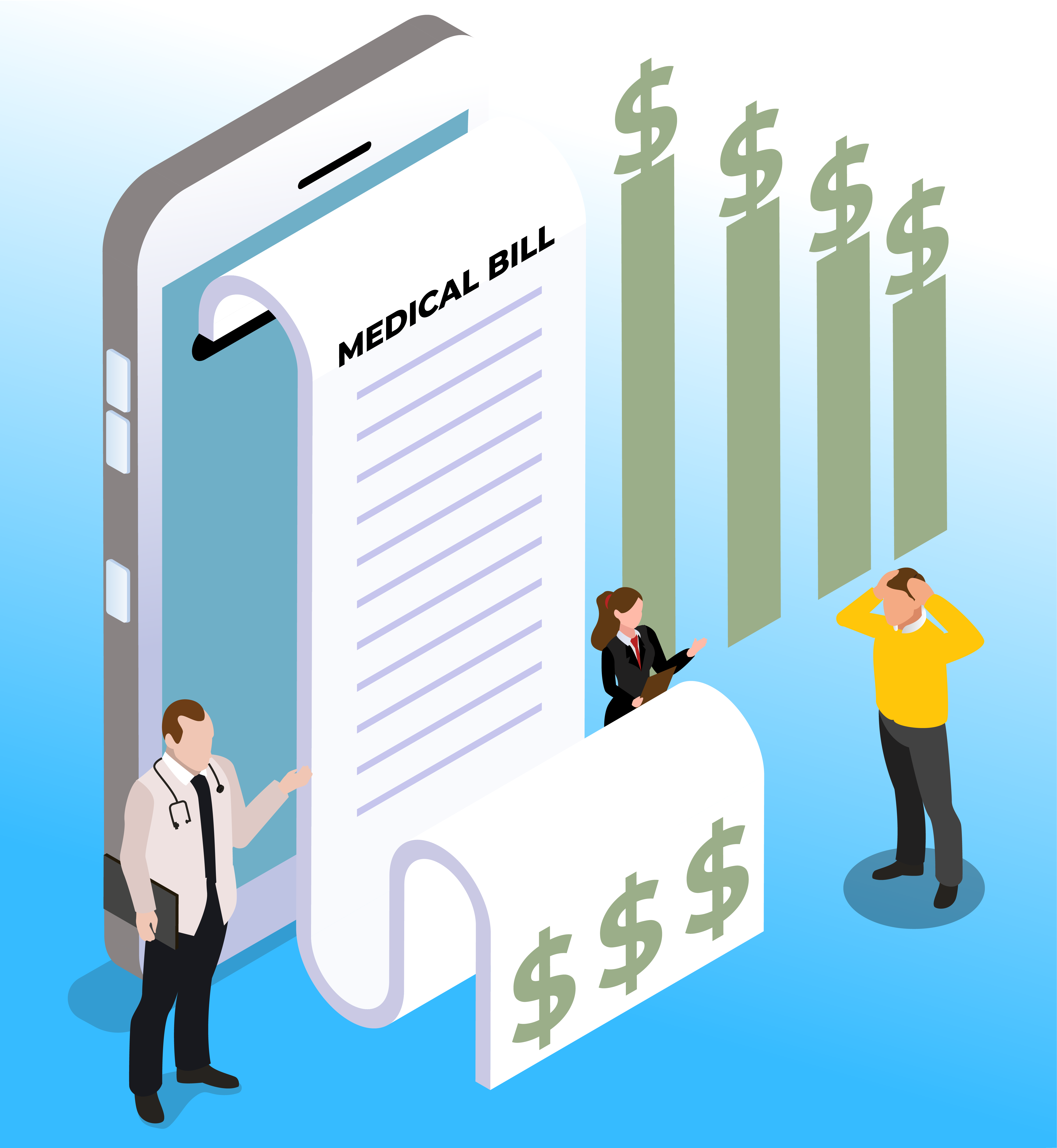
Medical debt represents one of the most significant financial burdens facing Mississippi families. This debt holds negative consequences for the state’s economy and healthcare system.

One in five Mississippi Adults has medical debt in collections.
Mississippi Insurance Department. (2025). “Balance billing”. https://www.midhelps.org/insurance-guide/balance-billing/
The Impact of Medical Debt
- Stifles Economic Growth by reducing consumer spending
- Threatens Rural Hospitals with “bad debt”
- Delays or Prevents Patients from Receiving Healthcare
- Generates strain on the state’s healthcare system
What is Bad Debt?
Bad Debt consists of services for which hospitals anticipated but did not receive payment.
Source: American Health Association. (2010). American Hospital Association Uncompensated Hospital Care Cost Fact Sheet. https://www.aha.org/system/files/content/0010/10uncompensatedcare.pdf
BACKGROUND
One in five Mississippi adults has medical debt in collections. This means over
595,200 residents are shouldered with healthcare bills that consume 18.7% of their median, monthly household income (MID, 2025; McCann, 2025).
Consequences of Medical Debt
- Negatively impacts Mississippi’s economic growth by reducing consumer spending.
- Threatens rural hospitals with closure due to mounting “bad debt.”
- Causes patients to delay or do without necessary care over cost concerns.
- Going without necessary care can result in health complications and generate higher long-term costs for the patient (Zhuang, 2019).
- Going without necessary care can exacerbate chronic conditions and place higher costs and strain on Mississippi’s healthcare system (Zhuang, 2019).
Causes of Medical Debt
There are causes of medical debt which are unavoidable, but the following are barriers that if addressed could improve patients’ ability to manage treatment and debt.
- Adjusting the Provider Patient Power Imbalance: A power imbalance exists between providers and patients. It comes from the patient’s lack of information and absence of medical training. This vulnerability impedes the patient’s ability to navigate treatment and cost decisions until after services are rendered (Nimmon, 2016).
- Simplifying Complicated Billing Structures: Today’s healthcare system is characterized by complex pricing structures, surprise billing practices, and limited cost visibility. All of which can prevent patients from making informed healthcare decisions (Meyer, 2023).
- Third party interference, example – Pharmacy Benefit Managers (PBMs): Federal and state laws have recently provided numerous restrictions on PBMs. These policies prevent the misrepresentation of drug costs and contractual gag clauses aimed at discouraging providers from recommending cheaper medications. However, PBMs still implement practices that can add to a patient’s medical burden and complicate disease management (FTC, 2025).
- Missing or Incorrect Explanation of Benefits (EOB): EOBs are frequently mistaken for medical bills, but they are intended to be compared against medical bills to ensure there are no discrepancies in charges and coverage. It’s critical to understand one’s EOB to avoid unnecessary medical debt (Walker, 2024).
- Insufficient Health Insurance Coverage: According to the United States Census Bureau, American Community Survey in 2023, 15.2% nonelderly Mississippi Adults were uninsured (Center for MS Health Policy, 2025). Of these uninsured adults, 49.5% worked full-time jobs and 19.2% worked part-time jobs (Center for MS Health Policy, 2025). Increasing healthcare coverage options and scope could improve access to preventative care and treatment.
Pharmacy Benefit Managers(PBMs)
Third-party administrators (TPAs) act as managers and coordinators for healthcare plans. Pharmacy Benefit Managers (PBMs) are one kind of TPA that sit between patients, pharmacies, and insurance companies. Their purpose is to help control prescription drug costs.
Source: Medicaid.gov. (2020). Are Pharmacy Benefits Managers (PBMs) and Third Party Administrators (TPAs) considered to be third-party resources for purposes of Medicaid? https://www.medicaid.gov/faq/2020-04-15/94056
Explanation of Benefits (EOB)
An explanation of benefits is an insurance company’s statement that describes the costs involved for visits to your doctor or clinic. In short, it’s
a statement to let you know a claim has been filed, along with details of the costs.
Source: United Healthcare. (2025). https://www.uhc.com/understanding-health-insurance/how-does-health-insurance-work/explanation-of-benefits
Policy Recommendations
There are multiple ways for Mississippi to improve healthcare cost transparency.
- Educating and Empowering Patients
Policies to improve access to information about treatment and medical billing can empower patients to navigate treatment and debt.- Explanation of Benefits (EOB) Online Delivery: Educates members about prices after services are rendered
- Education and Resources: Improving health literacy and developing resources to help patients understand their healthcare services
- Increase Restrictions on Pharmacy Benefit Managers (PBMs)
Mississippi has taken steps towards healthcare cost transparency with acts such as the Mississippi Health Care Cost Transparency Act and the Prescription Drug Consumer Affordable Alternative Payment Options Act. However, problematic practices such as “step therapy” and “spread pricing,” still exist and can unnecessarily increase the costs of healthcare treatment (Daniels, 2019). These practices can also hinder disease management for afflictions like HIV, chronic conditions, and autoimmune disorders (Chronic Disease Coalition, 2024). By placing further restrictions on these practices, treatment and debt can be more easily
managed. - Further Streamlining the Billing Process
- Simplifying Pricing Structures and Billing Models: Payment reform could alleviate the burden of medical debt on patients and providers. Currently many providers use a Fee for Service (FFS) model for billing. Switching to a Value-based care (VBC), bundled payments, or accountable care organizations (ACOs).
- Online price transparency tools: Allow patients to compare prices and medical procedures before receiving treatment.
- Improving Healthcare Coverage and Scope
Mississippi’s uninsurance rate for nonelderly adults is 5% higher than the national average (Center for MS Health Policy, 2025). This lack of healthcare coverage contributes to medical debt and the avoidance of necessary healthcare services. Improving access to healthcare coverage could aid in improving access alleviating medical debt. Additionally, improving healthcare coverage scope to include more ancillary services could promote regular treatment and preventative care.
CONCLUSION
Improving Mississippi economically requires more than just providing job
opportunities. Helping Mississippians reduce their medical debt, navigate their treatments, and manage their existing conditions will help promote a healthier, safer working population and a stronger economy. Promoting healthcare cost transparency will improve both public health and the state’s health care systems.
SOURCES
- Center for MS Health Policy. (2025). A 2025 Profile of Health Insurance Coverage for Mississippi Adults: 2022 – 2023 Data. https://mshealthpolicy.com/2025/06/25/a-2025-profile-of-health-insurance-coverage-for-mississippi-adults-2022-2023-data/
- Chronic Disease Coalition. (2024). Ending the Stranglehold of Step Therapy. https://chronicdiseasecoalition.org/news/ending-the-stranglehold-of-step-therapy
- Daniels, H.; Bornstein, S. (2019). Policy Recommendations for Pharmacy Benefit Managers to Stem the Escalating Costs of Prescription Drugs: A Position Paper From the American College of Physicians. Annals of Internal Medicine. https://www.acpjournals.org/doi/10.7326/M19-0035
- Federal Trade Commission. (2025). FTC Releases Second Interim Staff Report on Prescription Drug Middlemen: Report finds PBMs charge significant markups for cancer, HIV, and other critical specialty generic drugs. https://www.ftc.gov/news-events/news/press-releases/2025/01/ftc-releases-second-interim-staff-report-prescription-drug-middlemen
- McCann, A. (2025). States where people spend the most and least on health care. WalletHub. https://wallethub.com/edu/states-where-peoplespend-the-most-least-on-health-care/144534#video
- Mississippi Insurance Department (MID). (2025). Balance Billing. https://www.midhelps.org/insurance-guide/balance-billing/
- Meyer, M.(2023). A Patient’s Journey to Pay a Healthcare Bill: It’s Way too Complicated. National Library of Medicine. https://pmc.ncbi.nlm.nih.gov/articles/PMC10262600/
- Neighborhood Trust and RIP Medical Debt. (2023). Medical Debt, Money, and Mental Health. https://unduemedicaldebt.org/wp-content/uploads/2023/08/MEDICAL_DEBT_MONEY_AND_MENTAL_HEALTH.pdf
- Nimmon, L.; Stenfors-Hayes, T.; (2016). The “Handling” of power in the physician-patient encounter: perceptions from experienced physicians. National Library of Medicine. https://pmc.ncbi.nlm.nih.gov/articles/PMC4835893/
- Rakshit,S; Rae, M; Claxton, G; Amin, K; and Cox, C. (2024). The Burden of Medical Debt in the United States. KFF. https://www.kff.org/healthcosts/issue-brief/the-burden-of-medical-debt-in-the-united-states/
- Saving Rural Hospitals. (2021). The Causes of Rural Hospital Problems. https://ruralhospitals.chqpr.org/Problems.html#impact-of-patient-baddebt
- Walker, Elizabeth. (2024). What is an EOB? People Keep. https://www.peoplekeep.com/blog/what-is-an-eob
- Zhuang, T.; Eppler, S.; Shapiro, L.; Roe, A; Yao, J.; Kamal, R.(2019). Financial Distress Is Associated With Delay in Seeking Care for Hand Conditions. National Library of Medicine. https://pmc.ncbi.nlm.nih.gov/articles/PMC8283103/

About the Author
Serena Pallan is a high school senior from Baltimore, Maryland, committed to advancing health policy and patient rights. She is leading a study at the University of Maryland aimed at reducing communication barriers between cochlear implant users and their medical professionals. In addition, Serena has advocated for patient rights in the Maryland House of Delegates, contributing
to initiatives that strengthen transparency and access to care. She hopes to expand her work beyond Maryland, collaborating with leaders in other states
to improve health outcomes and equity through policy.
The Center for Mississippi Health Policy aims to support students seeking to learn about health policy and become involved in public health.